
Unix support for businesses: operation, troubleshooting and scripts on AIX, Solaris, FreeBSD and HP-UX, as well as safe migration to Linux. Linux Service across Sweden.
Unix support when Linux is not the whole picture
Linux is our daily work, but many businesses also have Unix systems that have been in operation for decades. It may be an IBM server with AIX, an Oracle machine with Solaris or a firewall with FreeBSD. The systems often handle business-critical tasks, for example finance, warehousing and machine control. At the same time, the people who built the systems have often retired. Therefore, more and more businesses need Unix support from someone who understands both the old and the new world.
Linux Service has worked with Unix since long before Linux appeared in data centres. We know the shells, the tools and the file systems, and we know how they differ between manufacturers. In fact, commands that look the same often behave differently. As a result, a script that works in Bash on Linux can fail in ksh on AIX. Such details decide whether a job goes well or not.
Unix support for AIX and Solaris
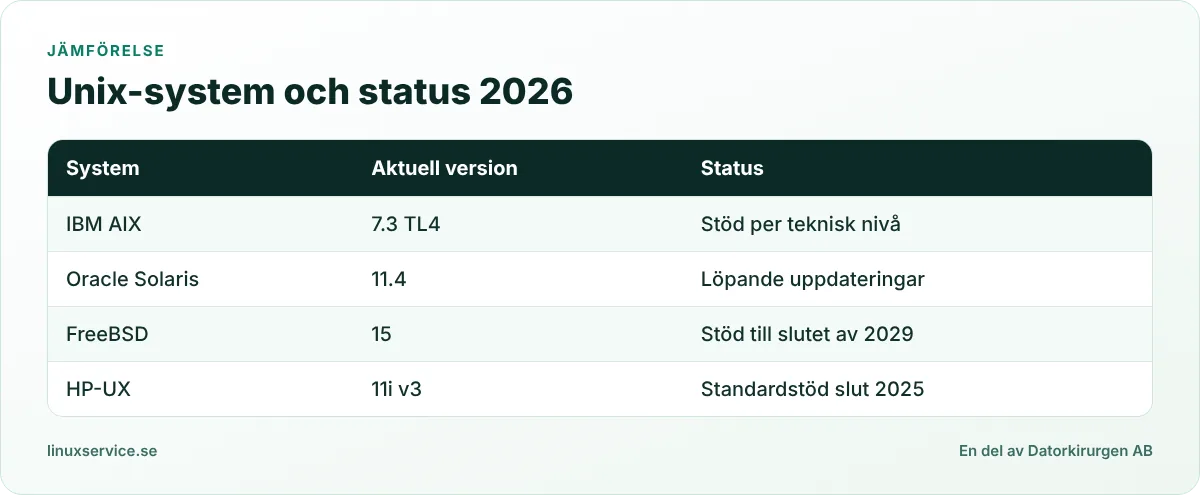
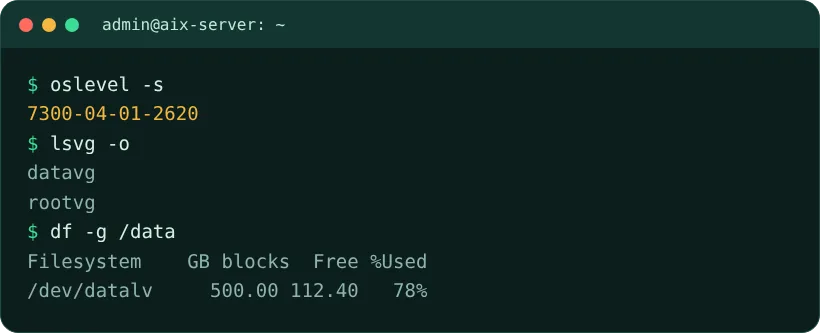
AIX is IBM’s Unix for Power servers, and banks, insurance companies and industry still use it. Technical levels, known as TLs, control the support. Each level receives fixes for a limited time, and therefore it is not enough to know that the server runs version 7.3. We check the level with oslevel -s and plan the update before the support ends. In addition, we manage logical volumes, users and backups with AIX’s own tools.
Solaris 11.4 is Oracle’s current version, and it still receives updates. There we work with ZFS, zones and the SMF service manager. The zones make it possible to run several isolated environments on the same server, roughly like containers on Linux. We also troubleshoot old installations of Solaris 10, which many businesses still have. In such cases, the goal is usually a safe plan for moving the services.
FreeBSD and HP-UX in practice
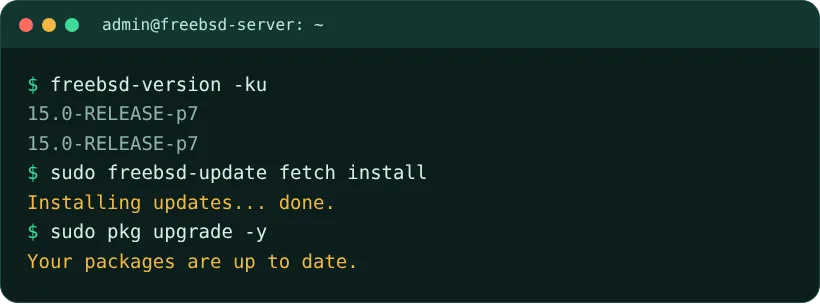
FreeBSD is a free Unix that many people use for firewalls, storage and web servers. Version 15 was released in December 2025, and the series has support until the end of 2029 according to the FreeBSD project. We update the system with freebsd-update and the packages with pkg. In addition, we build jails, which isolate services from each other with a low administrative load. pfSense and TrueNAS are also based on FreeBSD, and therefore the knowledge is useful in more places than you might think.
HP-UX, on the other hand, is on its way out. In fact, standard support for the last version, 11i v3, ended at the turn of the year 2025. Servers that still run HP-UX therefore receive no new fixes. That does not mean that you must switch them off tomorrow, but you should protect and isolate them. We help with exactly that, and then we draw up a plan for moving the services to a supported system.
Scripts that work on both Unix and Linux
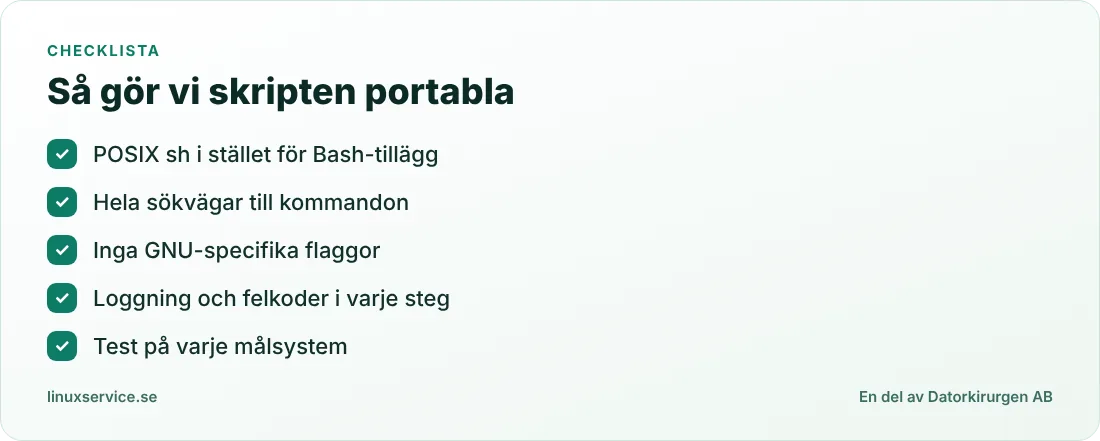
A large part of our work concerns scripts. Many old jobs are written in ksh or sh, and cron runs them every night. Often nobody knows exactly what they do any more. We read through the scripts, document them and rewrite them when needed. If the scripts are to move to Linux, we write them so that they follow the POSIX standard. Then they work on both systems.
The differences often lie in small details. In fact, tools such as sed, awk, date and ps have different flags in different Unix systems. As a result, a date format that works on Linux can give the wrong result on AIX. Therefore, we always test the scripts on the target system before they go into operation. Feel free to read more about Bash scripts and automation.
Migration from Unix to Linux
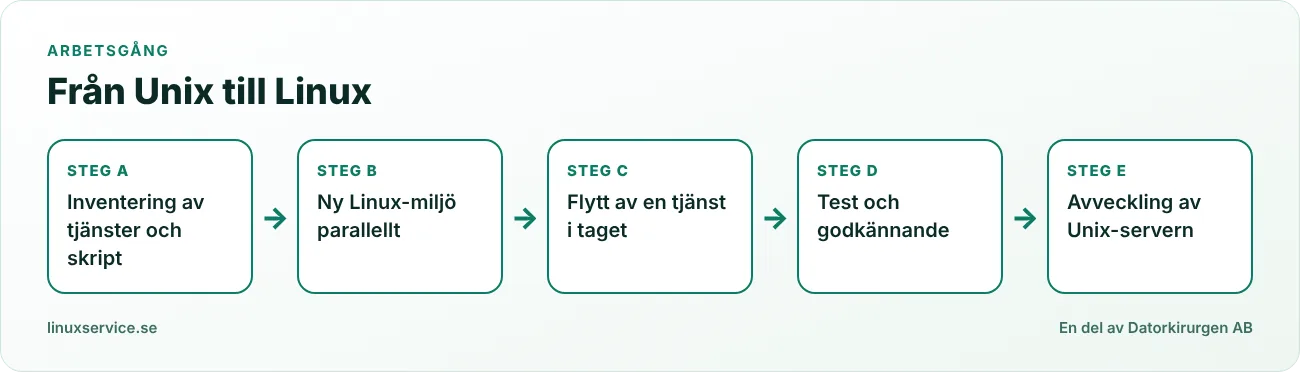
Many businesses want to leave Unix, since the hardware becomes expensive and the knowledge becomes hard to find. Common targets are Red Hat Enterprise Linux, AlmaLinux and Oracle Linux. A migration always starts with an inventory of services, scripts, databases and dependencies. After that, we build the new environment in parallel and move one service at a time. The old server remains until everything is tested, and as a result we can always go back.
Databases such as Oracle, Db2 and Informix require extra care. In fact, a change of processor architecture affects how the data is stored, and therefore we usually export the data instead of copying the files. Also read about Red Hat Enterprise Linux, which is often the target of such moves.
Contact Linux Service about Unix support
Linux Service is part of Datorkirurgen AB and has more than 30 years of experience of Unix and Linux. We provide Unix support remotely across Sweden and on site in Stockholm. Prices start from €1,300 per hour excluding VAT. Feel free to contact us before the support for your system ends, so that we have time to plan calmly.
Frequently asked questions about Unix systems and migration
Questions about Unix and Unix support
- What is the difference between Unix and Linux?
- Which Unix systems do you work with?
- Do you provide support for IBM AIX?
- Do you provide support for Oracle Solaris?
- Do you work with FreeBSD?
- Do you work with OpenBSD and NetBSD?
- Does HP-UX still have support?
- What do we do with a server that lacks support?
- Can you help with Solaris 10?
- Is macOS a Unix system?
Scripts and operation on Unix
- Can you read and document old ksh scripts?
- Do Bash scripts work on AIX?
- What does POSIX mean?
- Can you move cron jobs to Linux?
- Do you handle ZFS and zones?
- Can you manage backups on Unix?
- Do you work with jails on FreeBSD?
- Can you harden a Unix server?
- Do you monitor Unix servers?
- Can you troubleshoot performance on AIX?
Migration and prices
- Can you move services from Unix to Linux?
- Which Linux distribution suits you after Unix?
- How long does a migration take?
- Can databases come along to Linux?
- Can we go back if something goes wrong?
- Do we have to replace all the hardware?
- Do you work remotely?
- Do you come to us in Stockholm?
- How quickly can you start?
- What does your Unix support cost?