Linux for defence and research: RHEL, AlmaLinux and the legacy of Scientific Linux at CERN. We develop and operate Python, C++ and databases across Sweden.
Why defence and research choose a particular kind of Linux
Armed forces, research laboratories and heavy industry have different requirements from an ordinary office. The systems must work for ten years or more, and in addition every change must be traceable. Therefore, most such environments are built on Red Hat Enterprise Linux or one of its free clones, above all AlmaLinux. In fact, the same source code and the same packages give predictable behaviour, whether the server is in a laboratory or in a factory.
The most important advantage is the certifications. RHEL has crypto modules validated according to FIPS 140-3 and versions certified according to Common Criteria. In addition, in March 2026 the US DISA published a security guide, a so-called STIG, for RHEL 10. AlmaLinux 9 also has its own STIG. For procurement within defence and critical infrastructure, such documents are often a requirement. In short, Linux for defence and research is as much a matter of demonstrable security as of technology.
From Scientific Linux to AlmaLinux: the path of CERN
CERN, which runs the Large Hadron Collider particle accelerator, has run Linux on thousands of servers for decades. Together with the American laboratory Fermilab, it developed Scientific Linux, a free rebuild of RHEL for scientific computing. Later, CERN moved to CentOS 7, and in 2019 Fermilab announced that Scientific Linux would not receive a new version. After that, Red Hat changed the terms for CentOS, and the laboratories needed yet another new foundation.
In December 2022, CERN and Fermilab announced that they had chosen AlmaLinux. Today, CERN supports both AlmaLinux and RHEL in versions 8, 9 and 10, and the latest version has support until 2035. This clearly shows why the RHEL family dominates. In fact, programs that someone once compiled and validated must keep working for many years. At the same time, the laboratories need to be able to change supplier without rewriting their software.
The 2026 Nobel Prize: neutrinos, IceCube and Linux
The 2026 Nobel Prize in Physics went to Francis Halzen for his decisive contributions to the IceCube Neutrino Observatory and the discovery of high-energy neutrinos from space. The detector consists of a cubic kilometre of ice at the South Pole, and it generates large amounts of data every day. First, the measurement data is filtered on site, and after that it travels via satellite to the University of Wisconsin–Madison. There, a Linux cluster with thousands of processor cores and hundreds of graphics processors analyses it.
In addition, the software is a good example of how modern research works. The data processing framework is written in C++ with control files in Python, and the system that distributes the jobs across the world’s computing grid is also written in Python. The servers install and configure themselves automatically, since no engineer can travel to the South Pole on an ordinary Tuesday. It is exactly the same combination that we work with: Linux, Python, C++, databases and automation.
Python and C++ in demanding environments
In research and industry, two languages often meet. C++ handles the heavy computation, while Python controls the flow, reads in data and presents results. Therefore, we build environments where both work together, for example with pybind11 or Cython. We install compilers from the GCC Toolset, so that you can use a newer compiler without touching the system’s own. In addition, we pin the versions of all libraries, since a result must be reproducible years later.
We adapt the deployment to the environment. On ordinary servers, we use RPM packages or containers with Podman. In closed networks without internet, we instead build our own package repositories, which we update via a controlled transfer. We also profile the code with tools such as perf and Valgrind, and after that we optimise the parts that take the most time. Feel free to read more about Python on Linux.
Database development for large amounts of data
Measurement data, logs and production data require databases that handle large volumes without slowing down. Therefore, we develop and optimise databases in PostgreSQL, MariaDB and Oracle Database. This covers table structure, indexes and partitioning, but also secure access. For example, for time series, partitioning per month can make the queries many times faster. We also write stored procedures and integrations in Python and C++.
Security follows the same requirements as for the rest of the system. The communication is encrypted, sign-in uses certificates or strong passwords, and you can log every query against sensitive tables. When the server runs in FIPS mode, we also check that the database and all clients use approved algorithms. Read more about PostgreSQL on Linux and MariaDB on Linux.
Hardening according to STIG and FIPS
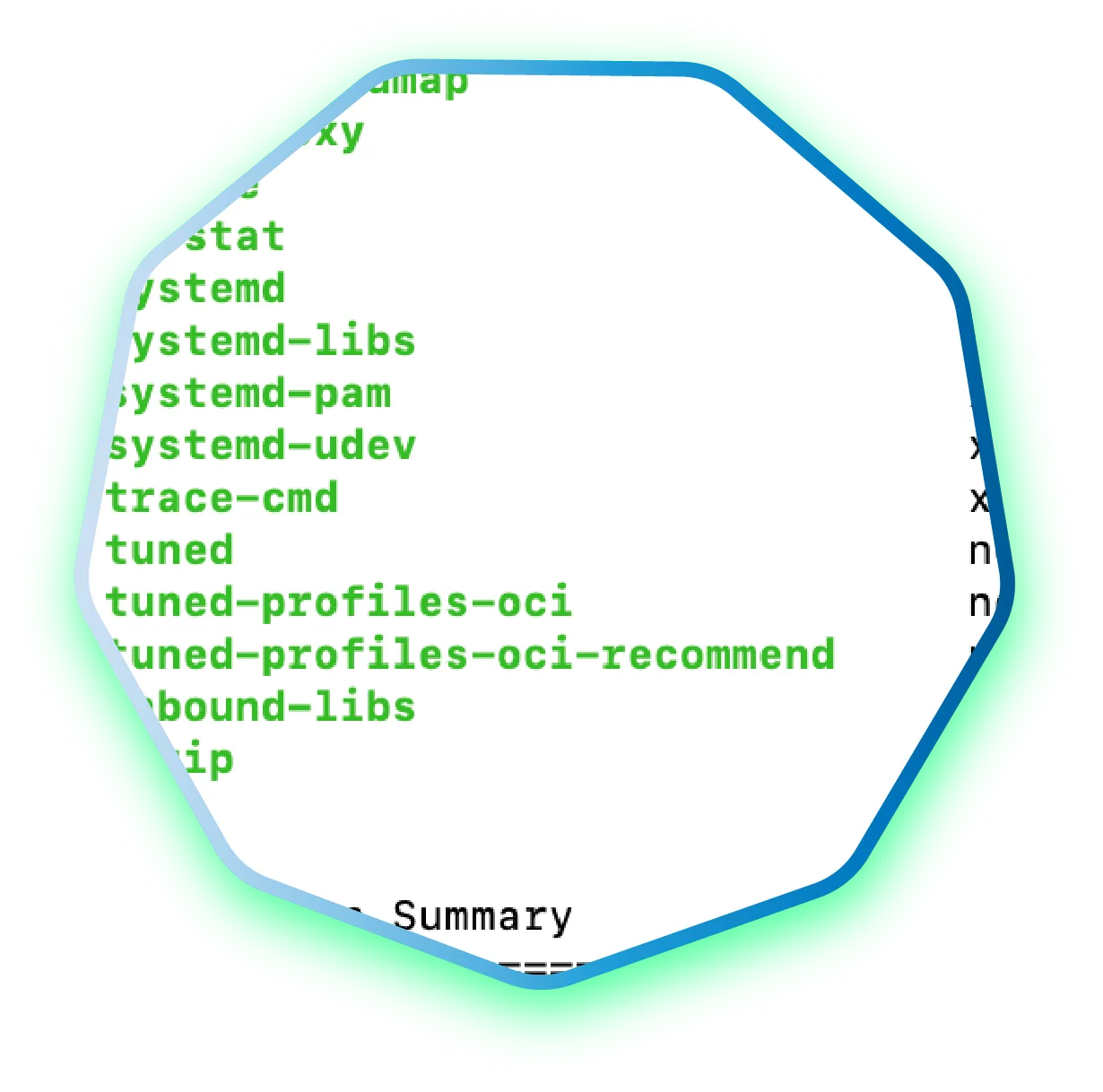
We harden servers according to the same guidelines that defence organisations use. With OpenSCAP and the STIG profile, we first scan the server and get a report of all deviations. After that, we fix them automatically with Ansible or already during the installation with Kickstart. We activate FIPS mode during the installation, since that is the most secure way. Finally, we run a new scan, and the result is a report that you can show to an auditor.
The hardening also covers disk encryption with LUKS, control of USB devices with USBGuard and logging with auditd. We always adapt the rules to your business, since a research server does not need exactly the same restrictions as a computer in a command and control system. Feel free to also read about hardening Linux and about AlmaLinux.
Contact Linux Service about Linux for defence and research
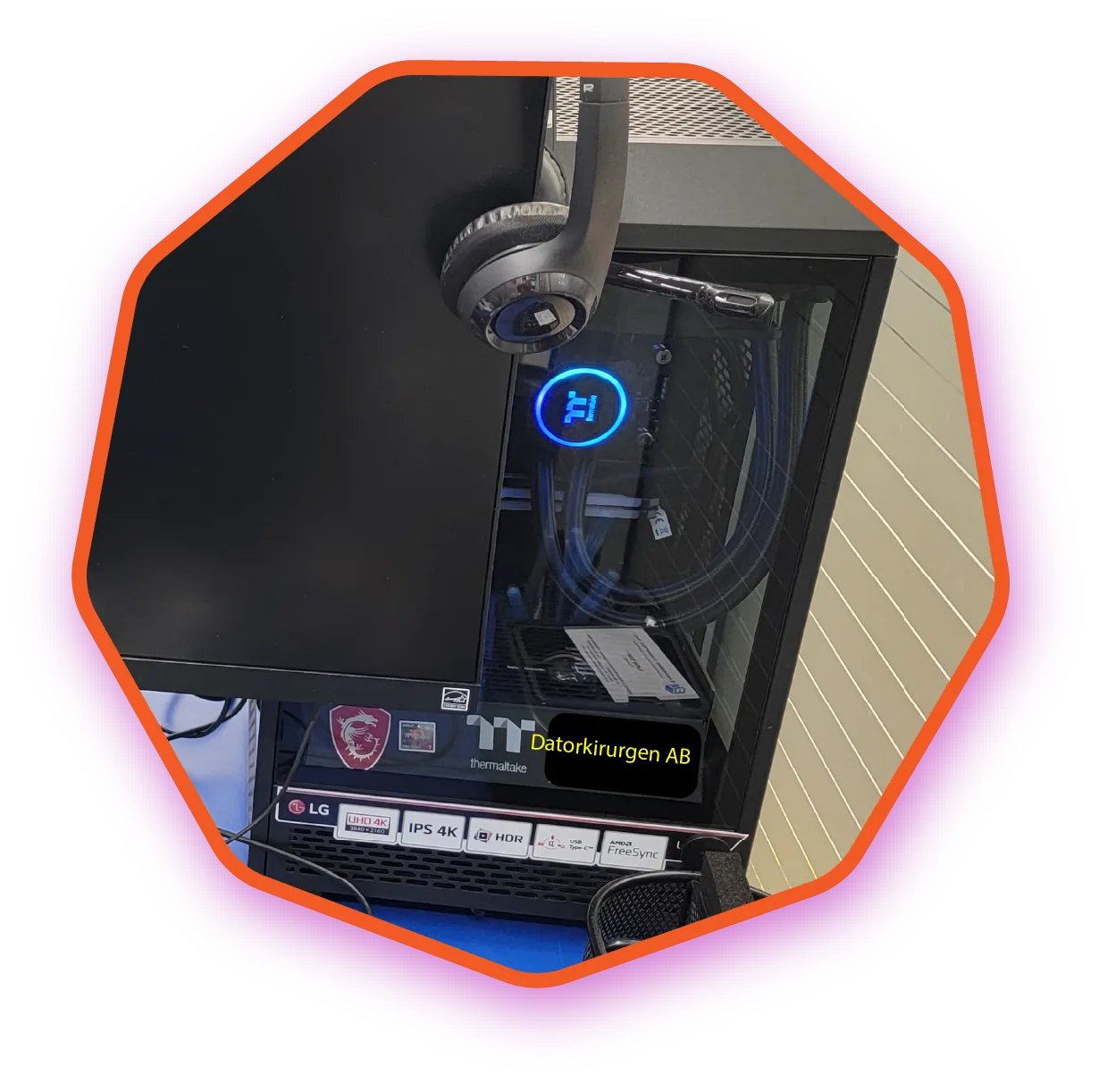
Linux Service is part of Datorkirurgen AB and has more than 30 years of experience of Linux, programming and databases. We provide support, deploy, develop and administer Python, C++ and databases on RHEL, AlmaLinux and Oracle Linux for businesses in defence, research and heavy industry across Sweden. Prices start from €1,300 per hour excluding VAT. CERN describes its choice of distribution at linux.web.cern.ch.
Therefore, contact us for a first conversation about your environment and your requirements. We work under confidentiality, and we adapt our way of working to your security routines. We work on site or remotely. Moreover, we can take responsibility for the whole chain, from installation to documentation and handover.
Frequently asked questions about Linux for defence and research
Questions about Linux for defence and research
- Why do defence organisations often use Red Hat Enterprise Linux?
- What is a STIG?
- What does FIPS 140-3 mean?
- How does Common Criteria work?
- Is there a STIG for AlmaLinux?
- How long does a version of RHEL have support?
- Why did CERN choose AlmaLinux?
- What was Scientific Linux?
- Who received the 2026 Nobel Prize in Physics?
- What is the IceCube Neutrino Observatory?
Linux for defence and research: Python, C++ and databases
- How do you combine C++ and Python in the same program?
- What is the GCC Toolset?
- Why should you pin library versions?
- Can you deploy programs in closed networks without internet?
- What is Podman?
- How do you profile C++ code on Linux?
- Which databases do you work with?
- How do you make queries against large time series faster?
- Does the database work when the server runs in FIPS mode?
- Can you write stored procedures and integrations?
More about hardening and assignments
- What does OpenSCAP do?
- When should you activate FIPS mode?
- What does USBGuard do?
- Why should the disks be encrypted with LUKS?
- Can you adapt the STIG rules to our business?
- Do you work under confidentiality?
- Can we get help on site?
- What does your help cost?
- Can you take over operation after the deployment?
- How do I contact you about Linux for defence and research?