
Kali Linux is the toolbox for penetration testing. This is how we audit your servers, websites and networks in a legal and safe way across Sweden.
What Kali Linux is and is not
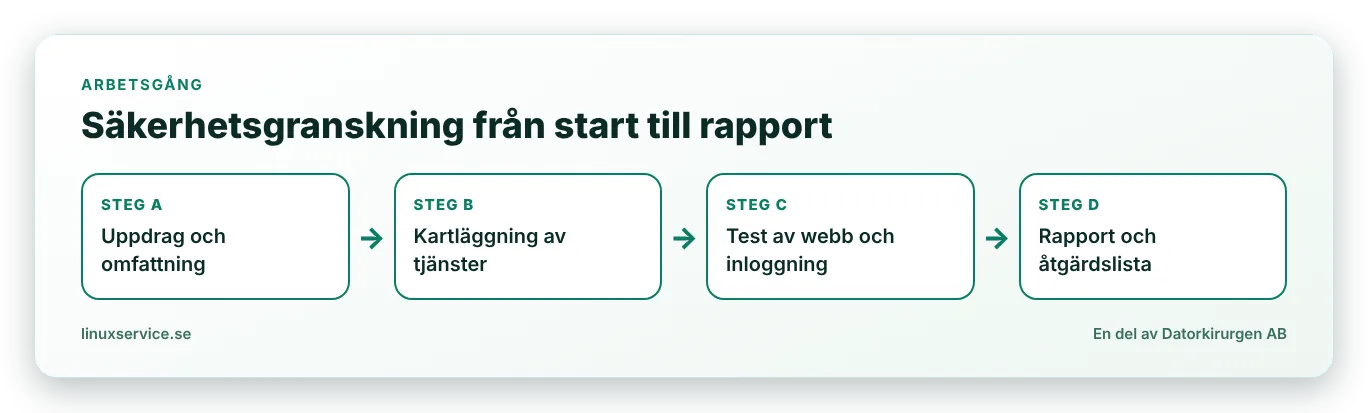
Kali Linux is a distribution based on Debian and aimed at security experts. It contains hundreds of ready-made tools for network analysis, web testing and password audits. The system receives new versions continuously, and therefore the tools always have the latest features. However, Kali is not meant as an everyday system in the office. It belongs with the person who carries out tests, not on an ordinary workstation. Therefore, we run it in an isolated environment, often on a separate laptop or in a virtual machine that we delete after the assignment.
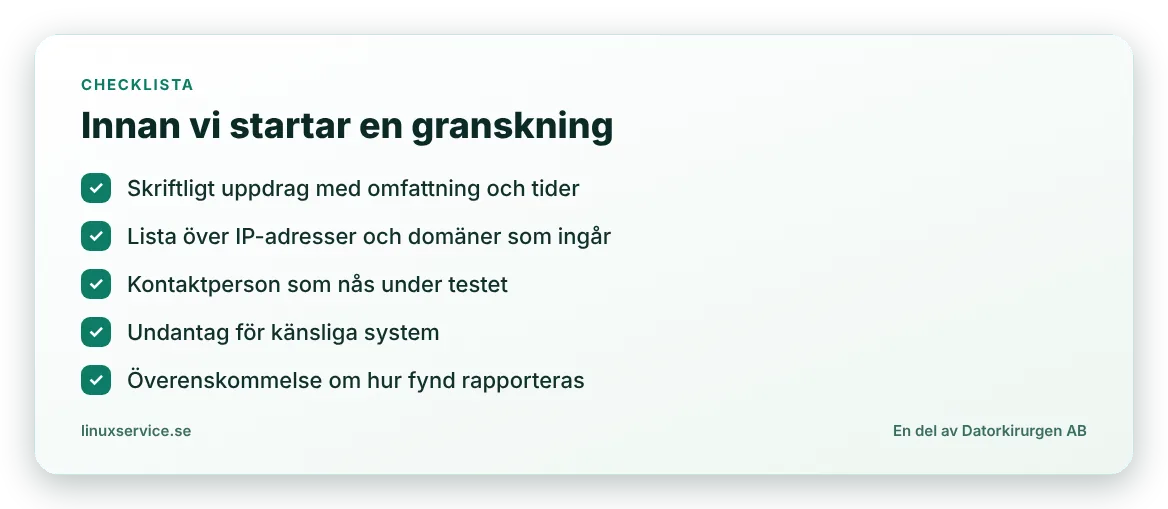
The tools in Kali Linux are the same ones that attackers use. The difference lies in permission, purpose and responsibility. Therefore, we never test anything without a written assignment that states the scope, times and contact persons. In addition, we agree on which systems are sensitive, for example production databases. In this way, you get an audit that shows real weaknesses without disrupting the business. Moreover, everyone involved knows exactly what will happen and when.
Mapping networks and services
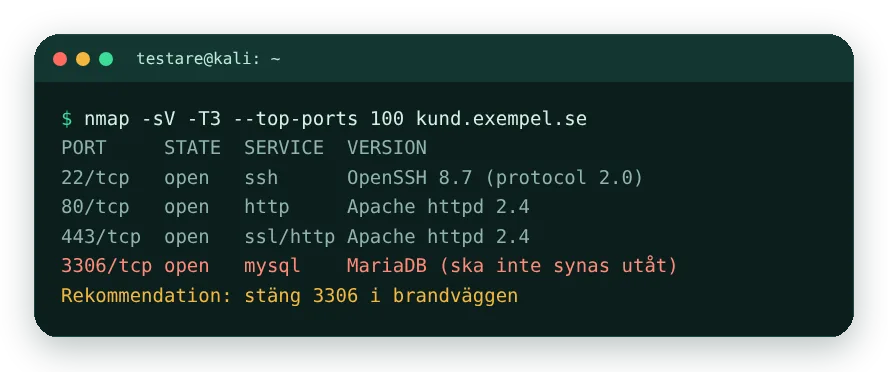
An audit starts with mapping. First, we see which addresses respond and which ports are open. In addition, the Nmap tool shows which programs and versions listen on each port. Often we find services that nobody knew about any more, for example an old test server or a database visible to the internet. Such findings are common, and you can often fix them with limited effort. We also note which services should sit behind a VPN instead of being directly visible to the internet.
After that, we compare the versions with known vulnerabilities. A web server with an old TLS protocol or an SSH service with weak settings ends up high on the list. We also check DNS, email settings and certificates. When it comes to email protection, we gladly refer you to Business IT Support, who specialise in DMARC and SPF.
Web applications and WordPress
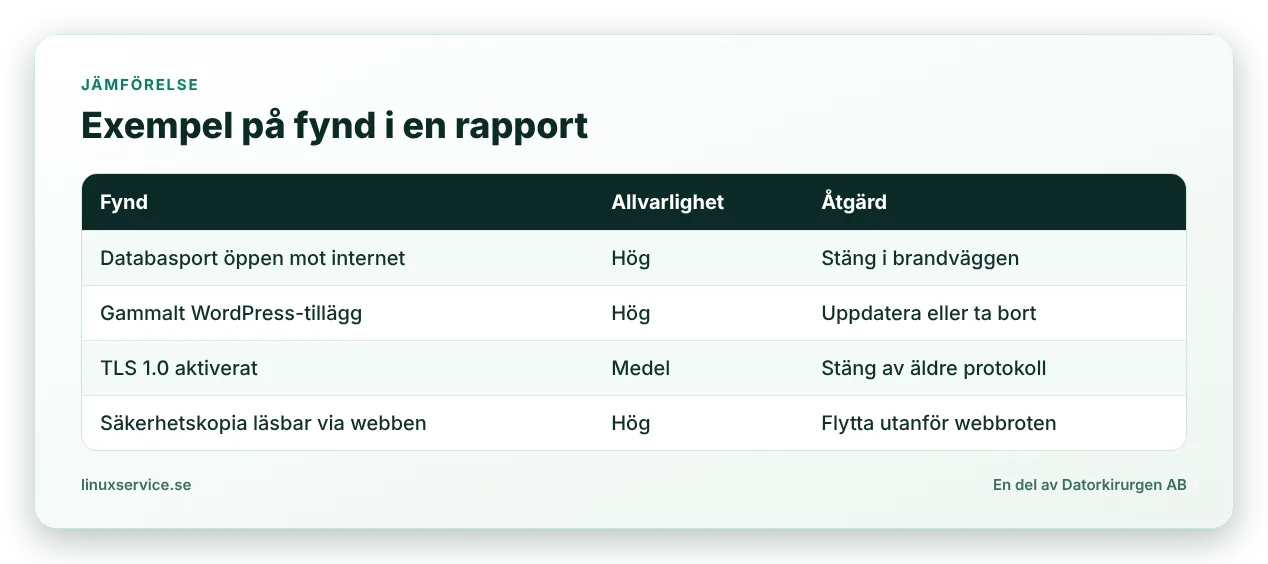
Many intrusions start on a website. Therefore, we review sign-in pages, forms and plugins. Kali Linux includes tools such as WPScan, Nikto and Burp Suite, and they reveal old plugins and incorrect permissions, among other things. We also test whether sensitive files are readable, for example backups or configuration files. Unfortunately, such files often remain after a move.
We carry out the tests carefully and without loading the server unnecessarily. When we find a weakness, we confirm it, but we do not exploit it further than necessary. We log everything, so that you can see exactly what we did and when. In addition, we keep no client data after the assignment, apart from what the report needs. If you want to read about how we work after an actual intrusion, see the article on forensics on a Linux server.
The report and what happens next
After the test, you receive a report in Swedish or English. It starts with a summary for management, and after that come technical details for the person who will take action. Each finding has a severity level, a description and a concrete proposal. In addition, we rank the actions, so that the most important comes first. In this way, the report becomes a working tool instead of a document that ends up in a drawer.
Many clients also ask us to carry out the actions. In that case, we update systems, close ports and tighten settings. After that, we run a new test to confirm that the weaknesses are gone. A recurring test every year is also wise, since new vulnerabilities appear all the time. Moreover, in the event of larger changes, for example a new website or a move to the cloud, we recommend an extra test. Feel free to also read about hardening Linux.
Contact Linux Service about Kali Linux
Linux Service is part of Datorkirurgen AB, which carries out security audits and forensic investigations for businesses. We use Kali Linux together with our own scripts and long experience of servers and networks. More about the tools is available in the Kali documentation, but we take care of the test itself.
Therefore, contact us for a first conversation about scope and price. We propose an audit that suits your size, from a single website to a whole office network. You always receive a written assignment before we start. In addition, we can help immediately if you suspect that something has already happened. In that case, we first secure logs and traces, and after that we close the gap. You then receive an account that also works as a basis for insurance companies or authorities.
Frequently asked questions about Kali Linux
Questions about Kali Linux
- What is Kali Linux?
- Which distribution is Kali based on?
- Is it legal to use the tools?
- Can you use Kali as an ordinary desktop system?
- Which tools are included?
- Why is a written assignment needed?
- What is the difference between vulnerability scanning and a penetration test?
- How often should a business be audited?
- Can the test disrupt our operations?
- Who sees the result of the test?
Kali Linux: networks and the web
- What does Nmap do?
- Why is an open database port dangerous?
- How do you audit a WordPress site?
- What is Burp Suite?
- How do you find old plugins that are vulnerable?
- Can you see whether sensitive files can be downloaded?
- How do you test sign-in pages without locking accounts?
- What do weak SSH settings mean?
- Do you also audit TLS and certificates?
- Do you test email settings too?
More about the report and actions
- What does the report contain?
- How do you rank the findings?
- Can you also fix the weaknesses?
- Do you carry out a new test after the actions?
- How long does an audit take?
- What does a security audit cost?
- Do you work remotely or on site?
- Can you help if we have already been hacked?
- Do you handle the information confidentially?
- How do I contact you about an audit?