
Post-quantum SSH: new OpenSSH clients warn about store now, decrypt later, and this is how we upgrade the server or switch off the warning with care.
The warning that suddenly appeared
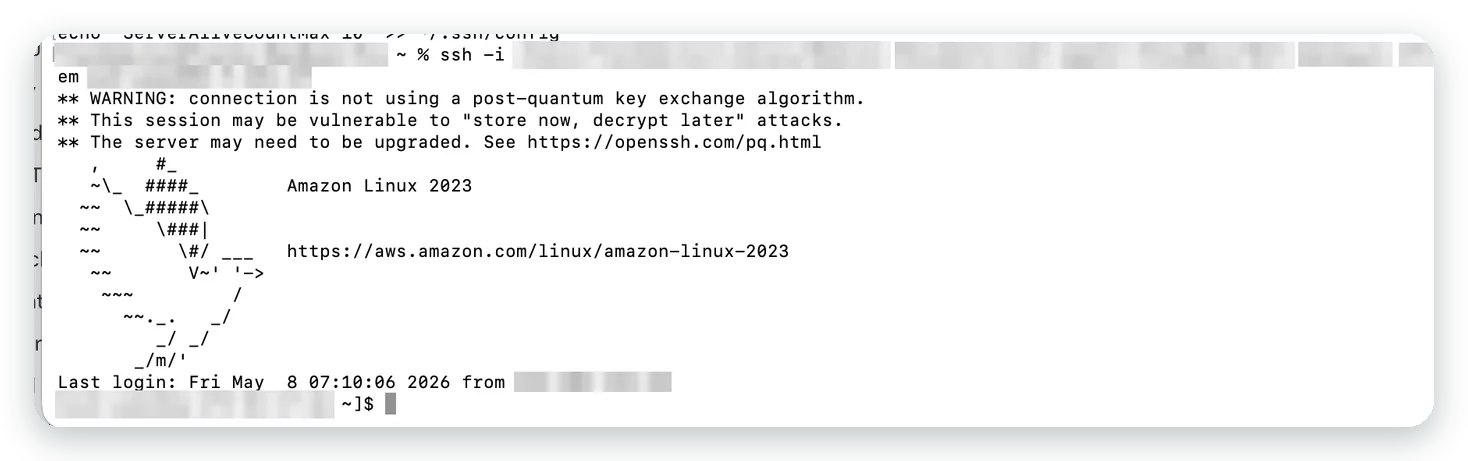
One day, our Mac started showing a new warning when we signed in to one of our servers. The message said that the connection did not use a key exchange algorithm that is secure against quantum computers. It also said that the session could be vulnerable to store now, decrypt later attacks. The warning comes from OpenSSH 10.1, released in October 2025. Many people have seen the same thing, and therefore we often get questions about it.
The warning appears in Terminal on Mac, in Linux terminals and in programs that use OpenSSH in the background. For example, you also see it with Git or when you copy files with scp. For those who do not work with servers daily, it can seem alarming. Therefore, we explain here what lies behind it, and also what you actually need to do.
The warning does not mean that someone has got in. Instead, it means that the server offers none of the new algorithms for key exchange. In other words, the client on the Mac is newer than the server. It is a prompt to upgrade, not an alert about an intrusion. But we take it seriously, since the risk is real in the long term.
What is store now, decrypt later?
Quantum computers that can break today’s encryption do not exist yet. However, an attacker can record encrypted traffic today and save it. If a sufficiently powerful quantum computer becomes reality in ten years, someone can decrypt the traffic. This is called store now, decrypt later. For most SSH sessions, the risk is small, but for sensitive systems it is worth taking seriously.
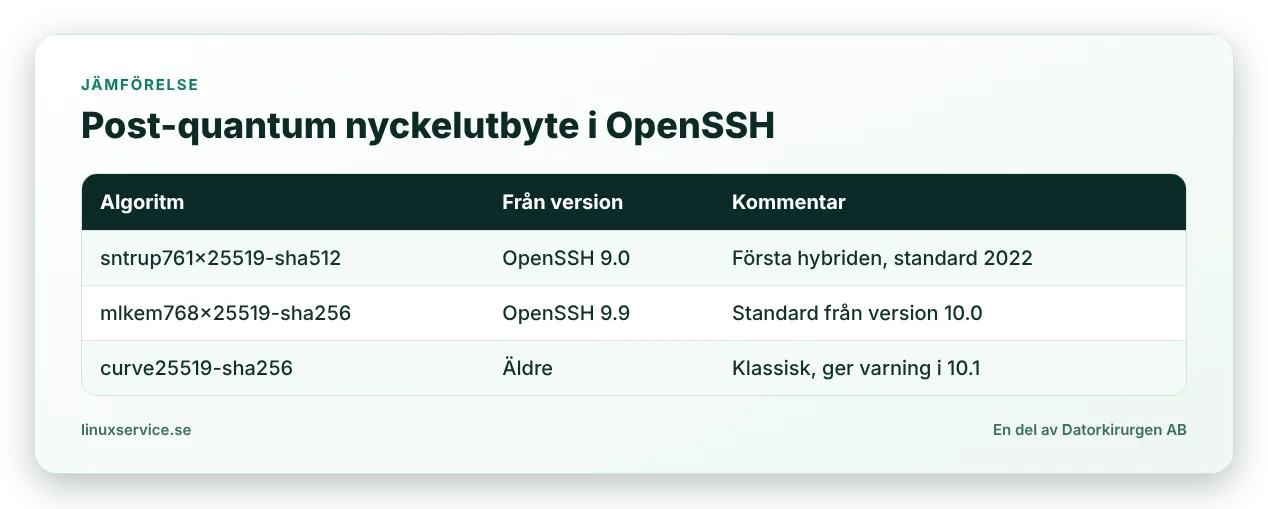
The solution is so-called hybrid algorithms. They combine a classic algorithm with one that is secure against quantum computers. If the new algorithm turns out to be weak, the classic one still protects. OpenSSH has had such support since version 9.0 from 2022. The algorithms are called sntrup761x25519-sha512 and mlkem768x25519-sha256, and the latter has been the default since 10.0.
Why the server did not offer the algorithms
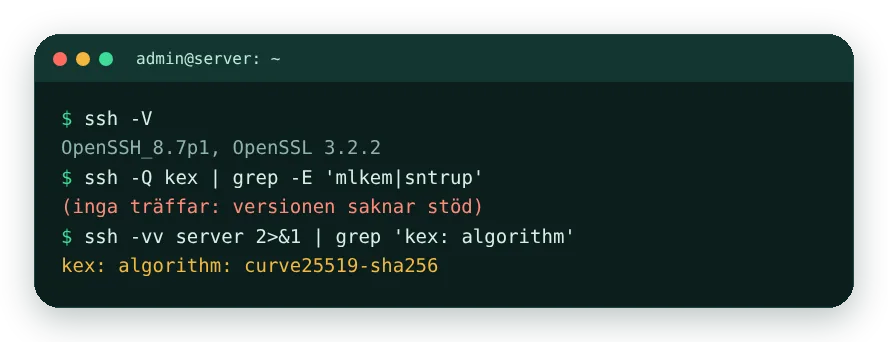
Our server ran Amazon Linux 2023 with OpenSSH 8.7. That version is too old to support any of the hybrid algorithms. The distribution does backport security fixes to the old version, but it does not change the major version of OpenSSH during the life of the product. Therefore, it does not help to just update the packages. The same applies to other long-term distributions with older OpenSSH.
First, we check which version the server has with ssh -V and which algorithms it offers with ssh -Q kex. If the server has version 9.0 or later but still does not offer the algorithms, someone has probably restricted the list in the configuration. In that case, it is enough to correct the KexAlgorithms setting. On older systems, however, you need a new distribution. Therefore, we go through all servers at once, since there are often several with the same version. The result is a prioritised list, where the most exposed servers come first.
What you can do
The best option is to upgrade the server to a distribution with OpenSSH 9.0 or later. Ubuntu 24.04, Debian 12 and later, RHEL 10 and AlmaLinux 10 all have support. If the server is to be replaced soon anyway, it may be the right time to move now. In that case, we plan the move so that it also takes care of other outdated parts. Feel free to read about hardening Linux at the same time.
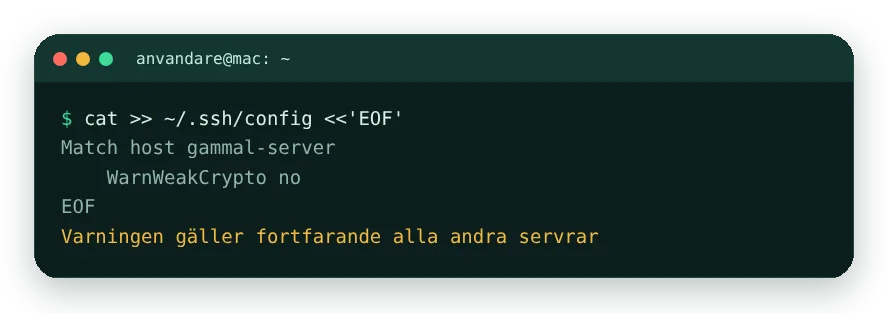
If you cannot upgrade the server directly, you can switch off the warning with the WarnWeakCrypto setting in the client’s configuration. OpenSSH recommends doing it selectively, for one server at a time. You then still see the warning for all other servers. In addition, we add a reminder to upgrade, so that the switch-off does not become permanent.
Contact Linux Service about post-quantum SSH
Linux Service is part of Datorkirurgen AB and helps businesses with SSH, encryption and secure servers across Sweden. We check your servers, upgrade where needed and set up the clients correctly. OpenSSH explains the background on its page about post-quantum cryptography.
Therefore, contact us if you have seen the warning and want to know what it means for you. We go through all servers and propose a plan. We work remotely. In addition, we can take care of the upgrade itself. You then receive a short summary of which servers are done and which remain.
Frequently asked questions about post-quantum SSH
Questions about post-quantum SSH
- What does the warning about post-quantum key exchange mean?
- Does the warning mean that someone has got in?
- Which version of OpenSSH shows the warning?
- What is store now, decrypt later?
- Are there quantum computers that can break encryption today?
- How does a hybrid algorithm work?
- What is mlkem768x25519-sha256?
- When did sntrup761x25519-sha512 arrive?
- Since when has OpenSSH supported the algorithms?
- Are the algorithms secure?
Post-quantum SSH: the server and the client
- How do you see which version the server runs?
- How do you see which algorithms it supports?
- Why is it not enough to update the packages?
- Which distributions have support?
- What does the KexAlgorithms setting do?
- How do you switch off the warning?
- Why should you switch it off selectively?
- Does the warning also apply to SSH servers other than OpenSSH?
- Does this affect SFTP and Git?
- Does this affect signature keys?
More about security and support
- Do we need to change our SSH keys?
- Can you upgrade our servers?
- Can you check all our servers?
- Do you also help with VPN and firewalls?
- Do you work remotely?
- How long does a review take?
- What does your help cost?
- Can you set up SSH on our Mac computers?
- How often should we review the encryption?
- How do I contact you about SSH?